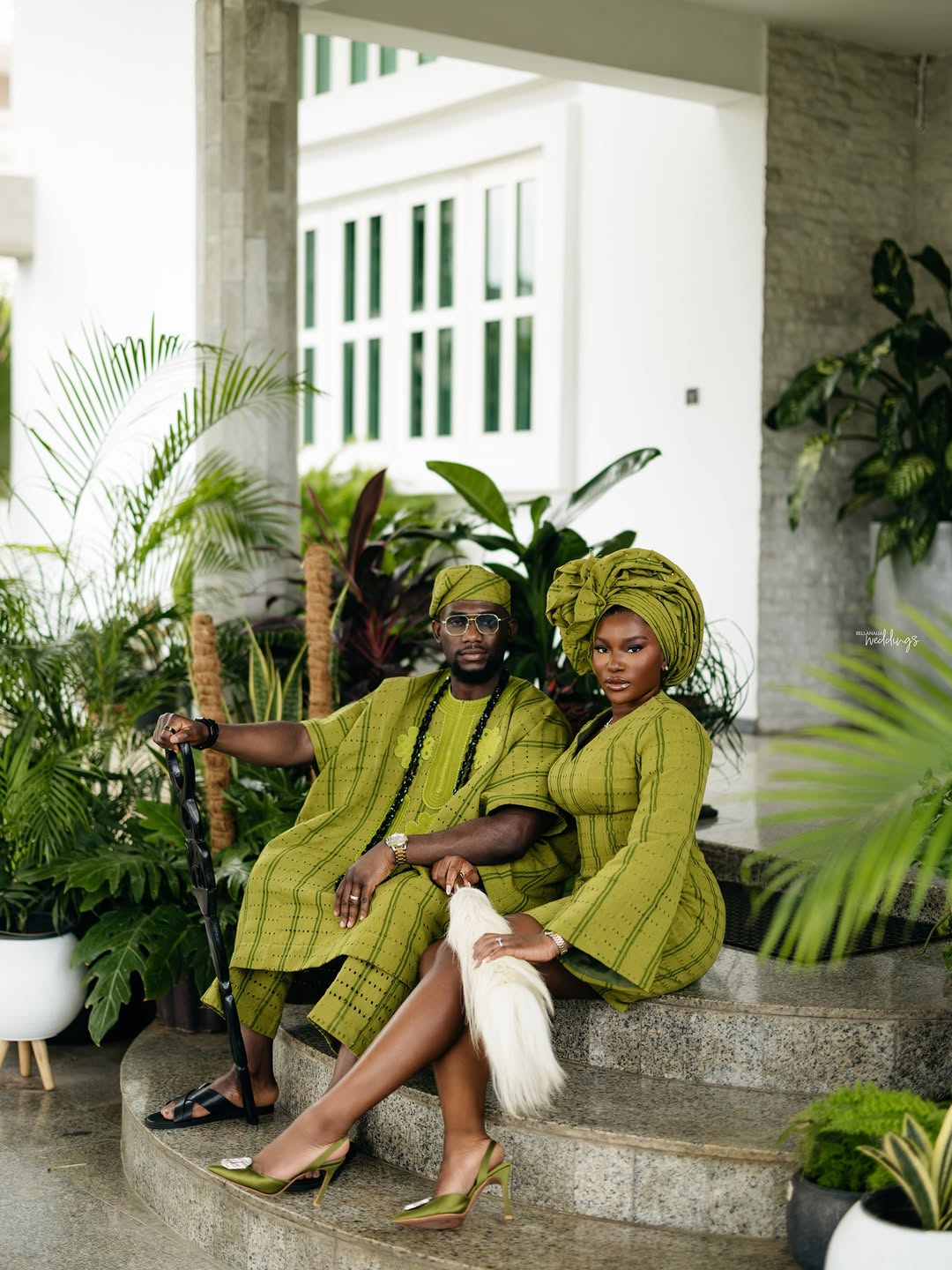
The pre-wedding shoot used to be a postcard. A grinning headshot, a date, a typeface in roses. Now it's a film set.
Five years ago a Nigerian save-the-date was a graphic — a single image dropped into a card template, ordered for printing in a Lagos market off Awolowo Way. Today it is an editorial spread, often outdoor, often shot at golden hour, with a couple posed in soft cream linens against a backdrop chosen for its texture as much as its postcode. The trade has moved from one designer with Photoshop to a small ensemble: a photographer, a videographer, a makeup artist, a dress or suit designer, a hair stylist, sometimes a content creator capturing the day for a separate behind-the-scenes reel. By the time the album lands on Instagram, the credits read like the closing titles of a short film.
The aesthetic conventions are unwritten but legible to everyone. Cream or oat or warm white. A man's hand, a woman's laugh thrown back over her shoulder. A bottle of champagne in foreground bokeh, or a typewriter, or a stack of books on a marble bench. There is a particular grammar of reveal — she walks ahead, he watches; he leans in, she does not look at the camera. The shoot is choreographed but the choreography is invisible by design. Every gesture is the rehearsal of a private moment that has been agreed to be public.
The save-the-date card was never quite enough. Nigerian engagement deserved a film.
The reading is sometimes that this is performance. That argument tends to come from outside the culture. From inside, it lands differently. Nigerian weddings have always been communal — multiple ceremonies across multiple weeks, the introduction, the traditional, the white, sometimes a fourth for the diaspora — and the engagement itself has long been a public state, celebrated by extended family and friend groups well before the day of vows. The pre-shoot fits this grammar. It is not the protagonists rehearsing privacy; it is them taking their seat in a long line of couples whose families want a record before the cloth is even purchased.
Look closely at the cast lists, too. The photographer, the videographer, the dress designer — these are not corporate credits. They are small businesses, often run by the bride's friends or a friend's friend. Each pre-wedding shoot is a tiny commission for a circle of practitioners who studied photography or fashion or makeup not always in school but on the job, building portfolios one Saturday at a time. The aesthetic of the modern Nigerian pre-shoot is, in part, the aesthetic of an entire creative class proving its case in public.
What's striking is how durable the image becomes. A bride who tied her gele on her wedding day will see those photographs once, on the day, and they will live in a family album. The pre-wedding photographs, by contrast, live on her sister's phone, her aunt's WhatsApp story, her colleague's pinboard. They are the public face of a private agreement. By the time the cloth is cut and the gele is pleated, the couple is already, quietly, famous to themselves.