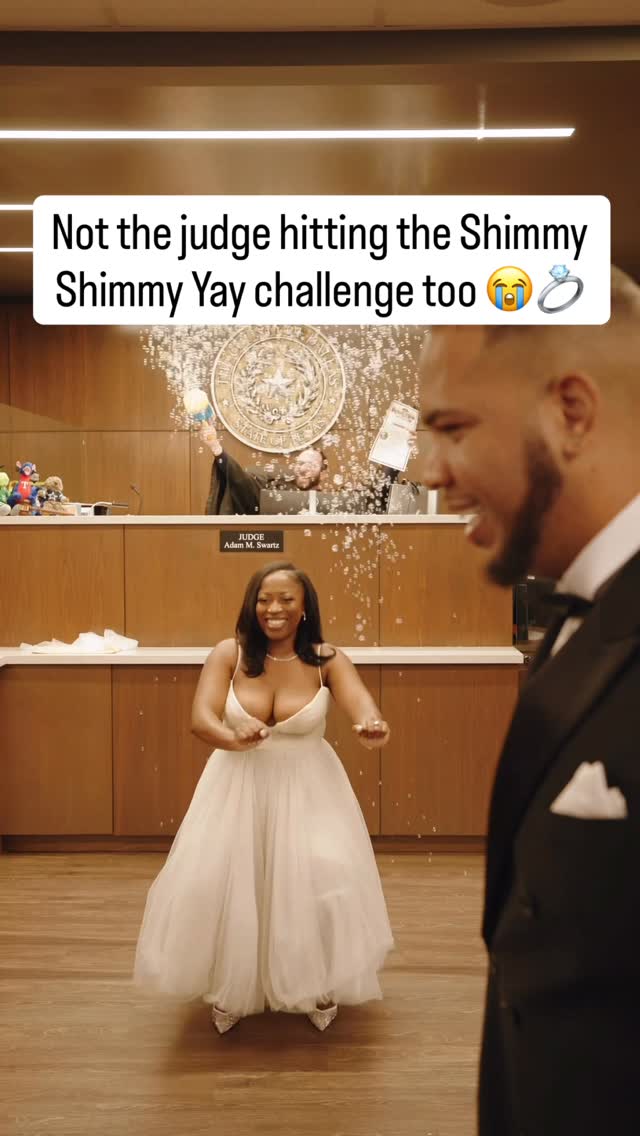
A judge in a black robe is dancing. A bride and groom — Nigerian, dressed up but not dressed up — are watching, half embarrassed, half delighted. The setting is a courtroom in Frisco, Texas. The cliché it ought to be is dry, procedural, signed-and-stamped-and-please-step-aside. The reality is a small, joyful breach of decorum that an entire generation of diaspora Nigerian couples will recognise as their wedding's truest moment.
Back home, the order is settled. There is the introduction, where the families meet and agree. There is the traditional, where the bride wears aso-oke and a gele tall enough to enter the room before she does. There is the white wedding, with its imported grammar of veils and vows. The civil ceremony — the part that, legally speaking, makes the marriage real — barely registers. It is a piece of paperwork, often signed quietly weeks before the public ceremonies, sometimes after. It is not the wedding. It is the fine print.
For the diaspora, the order rearranges itself. A couple in Houston or Manchester or Dublin may not be able to fly forty cousins in for the traditional. They may not have a hall in Lagos waiting. What they have is a courthouse appointment and the people who could make it. And so the civil ceremony quietly takes on weight it was never designed to carry. It becomes the only ceremony, or the first one, and the bride dresses for it as if it were the white wedding it has effectively replaced.
Decorum, in a Nigerian wedding, has always been the thing that gives way last.
What you watch on phones now — small clips from courthouse weddings filmed by a friend with a steady hand — is a generation rewriting the registry into something celebratory. The bride enters a county clerk's office in a gown her grandmother would call quite something. The groom wears a tailored suit, not a courthouse one. The vows are still the state's vows but they are read with the cadence of a pastor's. And when the judge, perhaps surprising himself, smiles and steps into the music for a beat, the room laughs in the particular Nigerian way — partly with him, partly at him, mostly at the unexpected gentleness of a stranger who has decided to participate.
The video that captures it goes viral not because it is unusual but because it is recognisable. Anyone who has been to a Nigerian wedding in any country knows that joy is contagious in a way that does not respect the dress code of an institution. The bench finds its way to the dance floor, and the dance floor briefly becomes a courtroom, and the marriage that begins in that quiet legal moment is not less ceremonial for being staged in plastic chairs and laminate floors.
What's lost, possibly, is the full pageantry of the home tradition — the gele, the parade, the family colour. What's gained is permission. The civil ceremony in the diaspora is becoming its own grammar: small, intentional, beautifully lit by a friend who shoots weddings on weekends. A wedding stripped down to the people, the legality and the music. The crowns can come later.