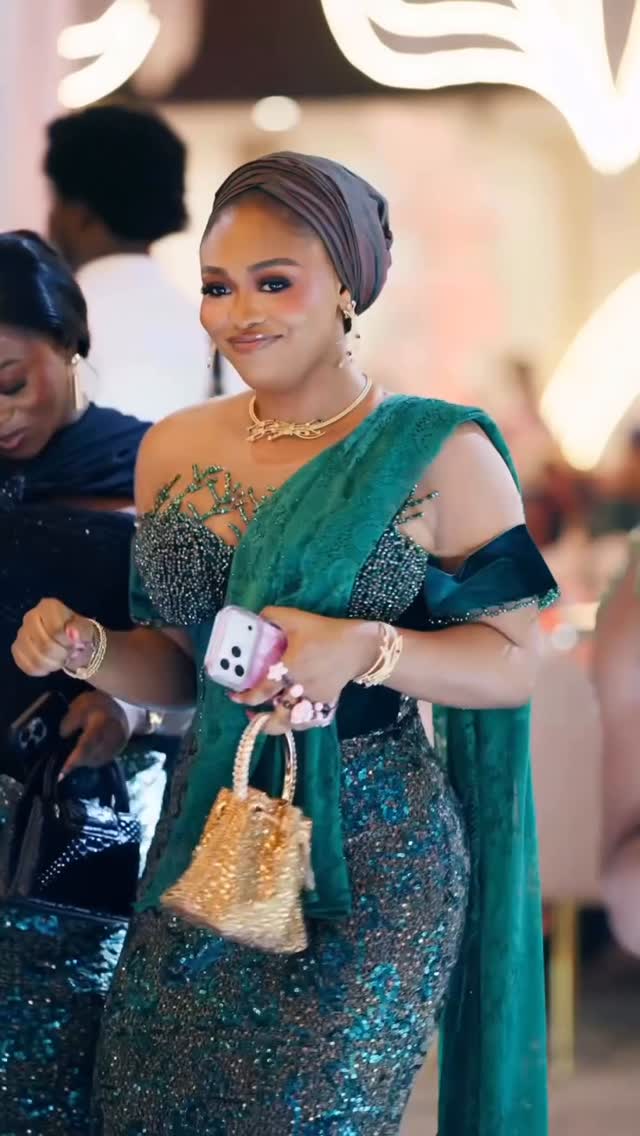
There is a credit line that has begun to appear at the bottom of Nigerian wedding captions, somewhere between the hair stylist and the DJ. It says, simply: Aesthetic Vision and Styling — the bride. Sometimes she is named, sometimes a bridal stylist is named alongside her. Either way, the line is doing new work. It is announcing that the look of the wedding is not, any longer, the planner's decision. It is hers.
The shift has been quiet but total. A decade ago a Nigerian wedding's visual identity was the responsibility of an event-management firm: the firm picked the colours, the firm sourced the florist, the firm hired the photographer they had a working relationship with. The bride approved. Today the bride arrives at the planner's first meeting with a moodboard. She has been pinning since the engagement party. She has researched cinematographers across two continents. She has already chosen her brand of champagne.
The bridal stylist — a relatively new role in the Nigerian wedding industry — has emerged to support this. Her job is not to dress the bride. Her job is to translate the bride's vision into the cumulative visual language of the day: the colour of the cake, the napkin fold, the angle of the cousin's gele, the lighting cue at the reception entrance. She is, in effect, the bride's chief of staff. She makes the bride's aesthetic legible to forty different vendors.
The wedding is no longer something the bride arrives at. It is something she has been making.
What's interesting is what this gives her, beyond the day itself. Twelve months of refining a visual language is, accidentally, an apprenticeship in being an art director. Some brides graduate from their own wedding into freelance bridal styling for friends. Some graduate into small interior brands. The wedding becomes a portfolio piece for a creative practice the bride did not previously know she had.
There's a quieter dignity in this than the older model. The bride who is delivered, fully styled, by a competent firm has a beautiful day. The bride who has authored her own day has a beautiful day and a public artefact of her own taste. The Nigerian wedding has always been, in part, an introduction of the new household to the social world. What's changing is who is doing the introducing. It is, increasingly, her.