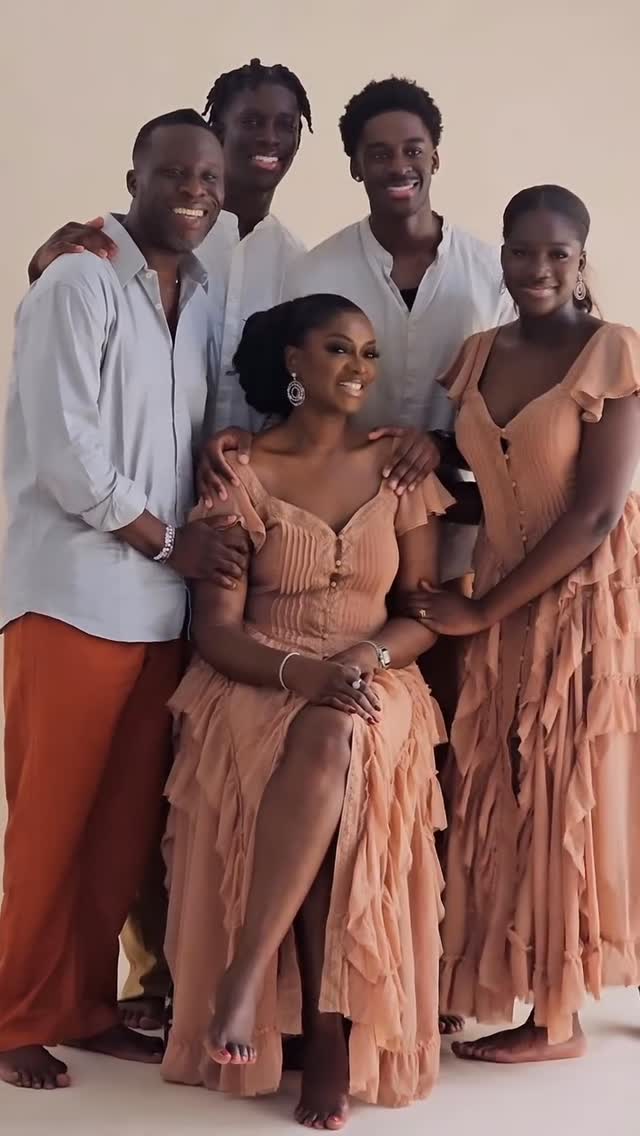
The Nigerian wedding has many photographs but only one census. It happens late afternoon, or early evening, before the reception cake has been cut and after the bride has done her second outfit change. The photographer summons everyone. Family of the bride. Family of the groom. Step in, please. Forty people, sometimes fifty, line up against a pale wall or a backdrop of white drapery. The patriarch is at the centre. The smallest grandchild is held aloft. Everyone wears the agreed colour. The shutter clicks once, twice, six times.
That photograph is the only one a Nigerian family will print and frame. The bride's portrait will live in an album. The first-look video will live on Instagram. The drone shot will live on a USB stick. The family group shot will live, mounted, on the wall of the family home for decades, and it will be the photograph small grandchildren are walked over to and told: That is your great-aunt. That is the woman whose ring this was. That is your father, before he became your father.
The photograph does several things at once that are difficult to do otherwise. It records who showed up. It records who has aged, since the last family group portrait, into an older row. It records, by absence, who has died. It records who is married to whom and who has children. It is, in a literal sense, a census of the Nigerian extended family at one specific Saturday afternoon — a census they will not call by that name, but which functions as one.
The wedding is the only event in modern Nigerian life where every relative is in the same room and standing still.
The choreography is unspoken but precise. Elders sit. Aunties stand on the second row. Younger married couples are placed at the edges. Single nieces and nephews fill the gaps at the back. The arrangement is sometimes corrected by a photographer, more often by a senior aunt who has been doing this since the 1980s and knows where every body should go.
What the photograph really records, of course, is not who is standing where. It records that the family persists. That a wedding has been celebrated. That a new line of two surnames is now visible in the front row. The Nigerian family group portrait is the form's most quietly load-bearing image. The bride's gele will be put away, the cake will be eaten, the room will be cleared. The portrait will hang. And every Christmas a child will look up at it and find, somewhere in the third row, the face that turned out to be hers.