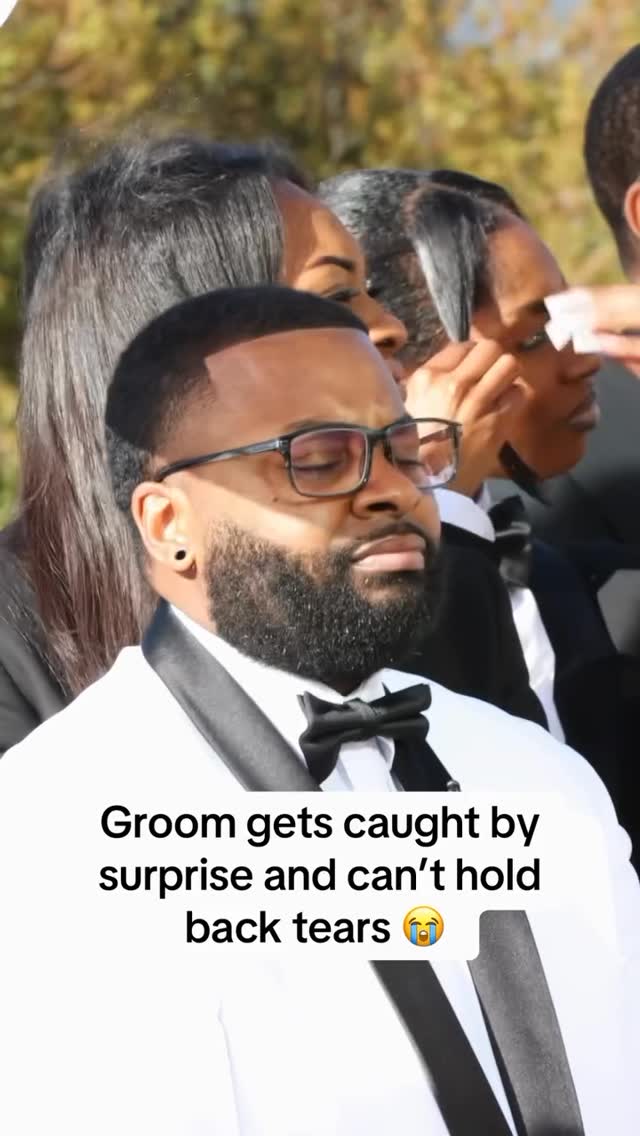
There is a small genre of Nigerian wedding video that has, in the last few years, taken up an outsized share of the internet's attention. The bride begins to sing — sometimes a hymn, sometimes a love song the groom does not know she has been rehearsing — and the groom, expecting nothing of the kind, simply breaks. He cries. The room cries. The aunt holding the camera cries. The video is caption-less, or near to it, and goes round.
What's striking is how often it happens. Walk through any wedding-content account on Instagram and you will find a quiet sub-collection of these clips, varying only in the song chosen, the colour of the suit, the room. The bride opens her mouth, and the room turns. The groom looks down, then up, then down again. He covers his face. He is given a handkerchief by a brother or a cousin or a hand he does not register. The thing has happened to him. By the time the song is over, the bride is laughing through her own tears, the groom is laughing, and the wedding has crossed an invisible threshold from ceremony into belonging.
The Nigerian wedding has always given men permission to feel publicly — the genre is older than this footage. A father may be expected to weep when he hands his daughter over. A best man may be expected to choke through his speech. What's newer is the camera, and the way the camera has democratised who gets watched. The crying groom is no longer a private moment in a slim circle; he is the day's most-shared frame, sent to a sister-in-law in Manchester before the dance has finished.
The voice arrives, and the man arrives back at himself.
Why does it land? Partly because the song is a gift the groom did not earn — there is no scripted reciprocity. He cannot dance better, or speak better, in response. He can only receive. And the act of public receiving — of being seen as someone who has been chosen, sung to, named — is something a man rarely gets in his life. The wedding gives it to him, for a few minutes, and the room holds him in it.
Partly, too, because the internet has tired of curated emotion. A whole decade of pristine wedding content has trained the eye to spot performance. The crying groom is the inverse: a man who has lost composure precisely because the moment is real. The pleated cloth, the photographer's setup, the tightly-arranged programme — all of that is the wedding's presentation. The voice is the wedding itself, and his face is what's left when presentation goes.
Watch enough of these clips and a small, unguarded thought lands: that the Nigerian wedding may be one of the few civic stages left where a man is permitted, even gently encouraged, to cry without having to apologise for it afterwards. The bride's gele will be tied tomorrow. The cake will be cut and the asoebi will be tucked away. But the moment when she begins to sing and he begins to come apart — that one stays. It joins a small archive of footage that families will keep, that the internet will keep, and that, watched a year later, will continue to do exactly what it did the first time.