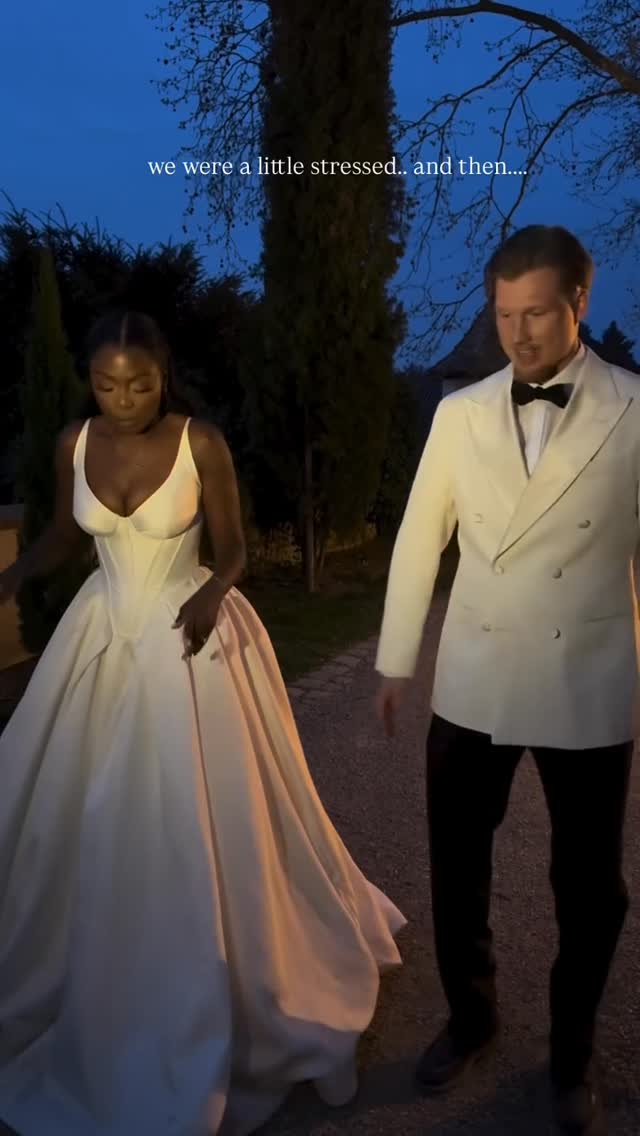
It is one of the more surprising shifts in Nigerian wedding content of the last few years. The most-shared video clip is no longer the dance entrance, the cake cut, or even the bride's outfit reveal. It is, increasingly, a thirty-second piece of footage in which the groom does something small and attentive for the bride. Holding her gown so it does not drag. Carrying her bouquet for a moment while she greets her aunt. Reaching out to steady her elbow on a step. Buttoning her cuff before she goes back to the floor.
The genre has its own caption: Things men do for their wives. Sometimes How did he do? The phrasing is borrowed from social media humour but it has settled into a kind of quiet appreciation. The clips are usually shot by a friend or a videographer who happened to be passing. They are not the centrepiece of the wedding photography package. They are, almost always, b-roll. And the b-roll is the part that travels.
What the b-roll is documenting, in aggregate, is a public form of male attentiveness that did not have a stage before the smartphone. Older Nigerian weddings had moments of tenderness, of course, but they were largely private — the groom was busy receiving guests, the bride was busy being photographed, the small acts of caring happened off-camera. Now everyone has a camera. The acts are no longer off-camera. And the bride's friends, watching the footage later, are noticing.
The Lagos young woman watching her cousin's wedding video on her phone is doing a small calibration. The bar she sets for her own wedding is being adjusted, gesture by gesture.
It is worth being honest about what this is. It is partly performance. A man who knows the camera is on him will sometimes be more attentive than he would be on a regular Tuesday. The cynical reading is that the wedding has produced a new genre of romantic theatre. The generous reading — and it is the more interesting one — is that wedding theatre has always existed, in every culture, and that the new theatre is at least pointed in a useful direction. It is asking grooms to be good at noticing.
The longer-term effect, possibly, is a quiet recalibration of what is being modelled. A young Nigerian man who has watched fifty of these clips before he gets married will, almost without thinking, hold his wife's gown when it threatens to drag. Not because the camera is on him. Because the gesture has become, in the air he has breathed for a decade, the thing one does. Theatre that becomes habit is, in the end, no longer theatre. It is just behaviour. The wedding video did its small civic work.